Emerging Countries: A Growing Need for Energy
10 min read
Growth in global energy demand is no longer driven by developed countries, but by so-called ‘emerging’ countries such as China, India and Brazil, and tomorrow Africa. The use of renewable energies to ensure this growth has become a key debate because it determines the future of energy transitions and therefore action against .

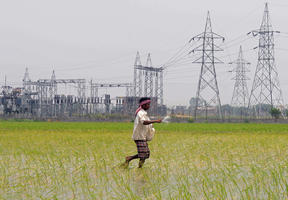
© AFP PHOTO - BIJU BORO - Installing reliable power grids is often a major challenge in some tropical countries, like here in India.
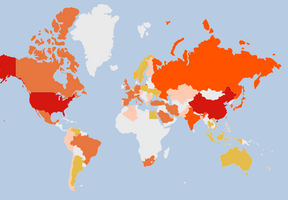
The has developed various scenarios for global energy consumption. The medium scenario predicts that global demand will grow by 37% by 2040. Around two thirds of this increase come from emerging economies: China, which drove most of the growth until the early 2020s, has gradually given way to India, now leading the global rise in energy demand. In sub-Saharan Africa, energy demand is expected to grow by 80% by 2040, driven in particular by strong population growth, which will double to nearly 1.8 billion inhabitants.
And yet, despite this strong growth, per capita energy consumption in these countries will still be well below what it was in the 1970s in developed countries.
Electricity: Large Networks and Local Solutions
Electrification involves both centralised, large-scale solutions and localised solutions based on microgrids or autonomous solutions.
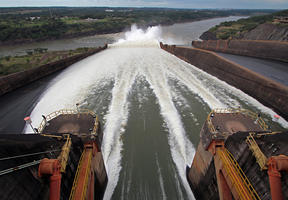
For example, Ethiopia is building what will be Africa's largest hydroelectric dam on the Blue Nile. In Vietnam, the government has increased access to twentyfold in 35 years through a proactive industrialisation policy. Several Asian and African countries, such as South Africa, are also investing in nuclear .
At the same time, the development of solar photovoltaics and technical advances in the use of are enabling decentralised and autonomous solutions. This dual approach has been implemented in Kenya, a country engaged in a vast programme: on the one hand, to extend electricity networks from large cities to nearby rural areas, and on the other hand, to develop local systems in remote areas, powered by biomass, micro-hydraulics, solar photovoltaics, energy or conventional fuels such as .
These efforts to transport energy over long distances and to develop decentralised solutions are supported by the World Bank.
The Emphasis on Renewable Energy
For the United Nations (UN), progress in access to energy must be an opportunity to advance the overall effort to reduce greenhouse gas emissions and thus combat . The UN wants this progress to contribute to doubling both the overall rate and the share of renewable energies in the global .
In their quest for all possible sources of energy – including gas and nuclear – to fuel their development, emerging countries are actively deploying renewable energies. In sub-Saharan Africa, renewables, including hydropower, are expected to account for half of the growth in electricity capacity, which is set to quadruple by 2040. China and India have focused on wind and solar power, while Brazil favours hydroelectric power and biomass (organic waste, , etc.).
How to Manage Urbanisation in Emerging Countries
Developing countries, all of which have large rural populations, are facing rapid urbanisation, which is occurring worldwide. According to a UN report, an additional 2.5 billion people are expected to live in urban areas by 2050, bringing their share of the world's population to 66% (compared to 54% today). This rural exodus will primarily affect India, China and Nigeria.
The world's major cities will grow, but the most significant new phenomenon will be the proliferation of small and medium-sized cities, according to the UN. Urban life is : in the developed world, 1 megahabitant = 1 gigawatt, meaning that 1 billion watts are needed for 1 million inhabitants. On the other hand, urban concentration allows for greater energy efficiency than a spread-out population, again in the developed world. This is, of course, provided that urban planning is controlled and does not develop in an unregulated manner. In developed countries, infrastructure (in principle) precedes population movements, while in developing countries it lags behind the growth of the city.
 Geopolitics of energy
See all